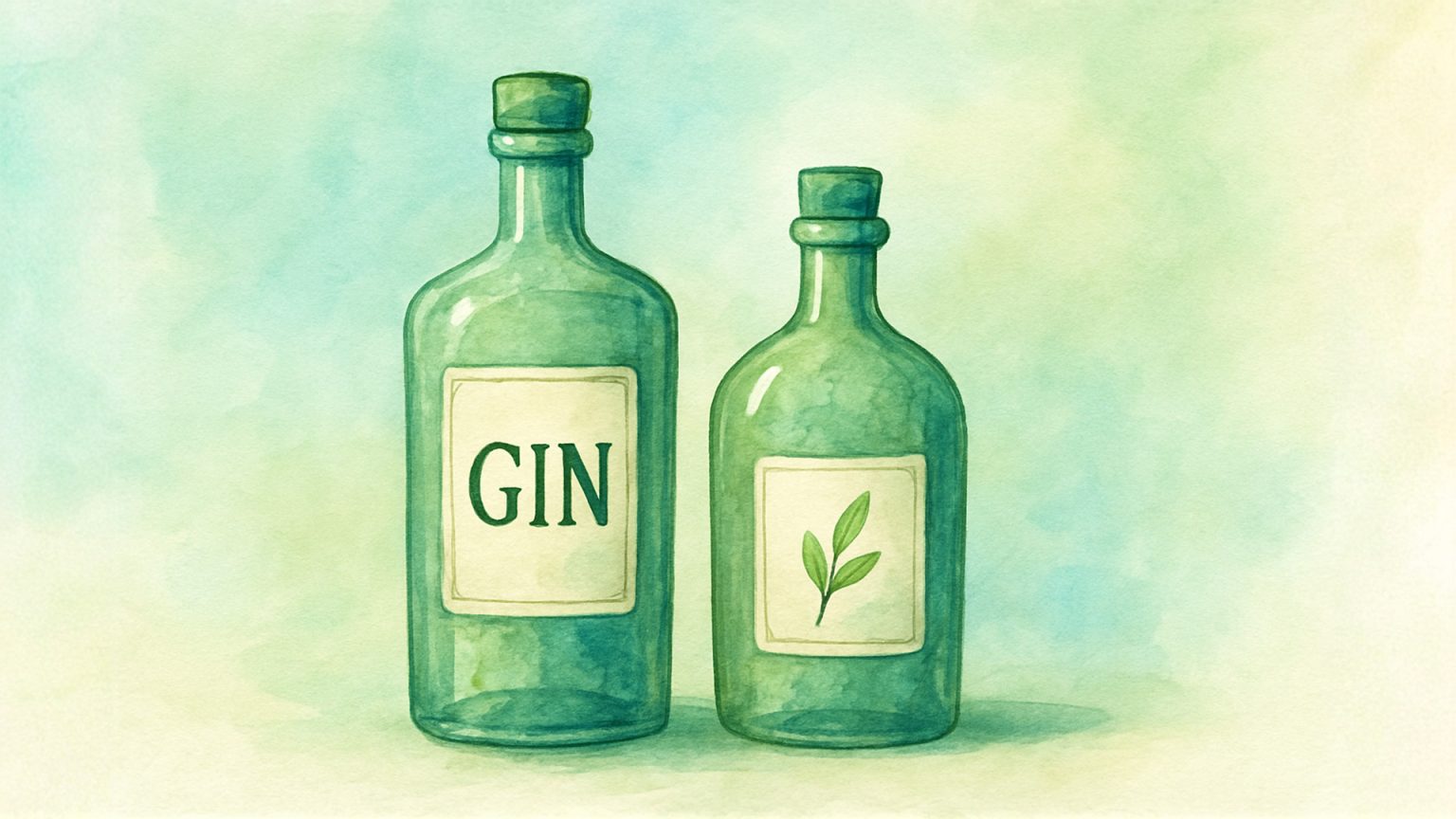
Luxembourg, 13 November 2025 – The Court of Justice of the European Union (CJEU) has delivered a landmark ruling: no beverage without alcohol may be marketed as “gin”, not even if clearly labelled “non-alcoholic gin” or “alcohol-free gin”.
In its judgment in Case C-563/24 (PB Vi Goods), the Court stated unequivocally:
“There is a clear prohibition in EU law on presenting and labelling a beverage such as that in question as ‘non-alcoholic gin’, due to the very fact that that beverage does not contain alcohol. The fact that the legal name ‘gin’ is accompanied by the term ‘non-alcoholic’ is irrelevant in that regard.”
The ruling is binding across all 27 EU member states.
Legal Definition Leaves No Wiggle Room
Under Regulation (EU) 2019/787, “gin” is defined as a spirit drink produced by flavouring ethyl alcohol of agricultural origin with juniper berries (Juniperus communis L.) and carrying a minimum alcoholic strength of 37.5% abv. The CJEU emphasised that the name “gin” is a protected legal sales description reserved exclusively for products meeting these criteria.
The Court also dismissed arguments that the ban infringes the freedom to conduct a business under the EU Charter of Fundamental Rights. The restriction, it said, is proportionate because it protects consumers from confusion and shields compliant gin producers from unfair competition.
Origin of the Case
German unfair-competition association Verband Sozialer Wettbewerb sued PB Vi Goods over its product “Virgin Gin Alkoholfrei”. A regional court in Hamburg referred the matter to Luxembourg for a preliminary ruling. The CJEU has now settled the question once and for all.
Immediate Industry Impact
The decision affects every zero- or low-alcohol brand currently using “gin” in the EU, even as part of compound terms. Several producers have already moved away from the word in recent years:
- CleanCo (UK) rebranded its flagship product from “Clean Gin” to “Clean G”.
- Lyre’s (Australia) changed its “Dry London Spirit” to “Gin Alternative” during its 2025 global packaging refresh.
- Diageo’s Tanqueray 0.0 and Pernod Ricard’s Martini Floreale have avoided the word “gin” altogether, opting instead for “alcohol-free spirit” descriptors.
The Gin Guild, which represents traditional gin distillers worldwide, has long campaigned against the use of the term on non-alcoholic products and has previously persuaded several brands to drop it voluntarily.
Wider and Global Ripple Effects
- Within the EU: Enforcement is now certain. Brands face relabelling or reformulation deadlines as national authorities implement the ruling, with most changes expected during 2026.
- United Kingdom: Although no longer bound by CJEU decisions post-Brexit, major UK retailers and the Gin Guild are likely to push for alignment to maintain consistency across Europe.
- United States: The TTB still permits “non-alcoholic gin” labelling, but any brand exporting to the EU will have to create separate EU-compliant packaging.
- Asia-Pacific: Markets such as Singapore, Japan, and China import large volumes of EU-bound zero-alc “gin” lines; distributors are already reviewing stock and labels.
What Comes Next?
This ruling fits into a broader EU trend of ring-fencing traditional food and drink names – from dairy terms reserved for animal products to, most recently, meat-related descriptors. Analysts expect similar challenges to “rum”, “whisky”, and “vodka” used on non-alcoholic alternatives in the coming years.
For the fast-growing alcohol-free segment, the path forward appears to be neutral terminology such as “botanical spirit”, “juniper spirit”, or simply “gin-style”. One thing is now certain across the European Union: the word “gin” itself belongs exclusively to the real, alcoholic spirit.