In flat volumes, regulatory headwinds, and productivity pressures, No/Low Alcohol redesigns when, where, and under what risks drinking remains viable – not for health or Gen Z, but for channels, compliance, and category survival.
While headlines celebrate NoLo as a Gen Z health trend or sober-curious lifestyle shift, the conversations inside brewery and distillery offices tell a starkly different story: this is less about wellness than about survival, compliance, and structural adaptation in a market that no longer grows on autopilot.
The global beverage alcohol market faces structural headwinds: total volumes stagnate or decline slightly, with wine hit hardest and mid-tier spirits and beer under pressure. Young consumers enter the category differently, favoring moderation over excess. IWSR data shows no-alcohol volumes growing at +7-9% CAGR through 2028-2029 in key markets, with the combined no/low category expanding at +4% volume CAGR; no-alcohol alone is forecast to add more than $4 billion in incremental value by 2028. Estimates vary due to contested boundaries – strict no/low analogues versus broader functional beverages – but the direction is clear: NoLo is the industry’s forced redesign of drinking’s acceptability, frequency, and perimeter.
Supply-Side Pressures: The Forced Innovation
Walk into any urban bar on a Thursday night, and the pattern is unmistakable: groups linger longer, tables turn faster, no one leaves early for fear of tomorrow’s hangover. Channels demand more flexible SKUs: on-trade venues need high-turnover, low-risk options that sell beyond nightlife – lunch hours, workplace socials, driving-safe occasions. Off-trade sees e-commerce and dedicated shelves explode, boosting inventory turns and all-day availability.
Regulatory and responsibility risks accelerate the shift. Alcohol drives liability – drink-driving, workplace incidents, ESG scrutiny, advertising curbs, age restrictions. NoLo serves as a compliance hedge: it aligns with public health narratives while safeguarding core licenses. Diageo and Heineken treat it as a regulatory buffer, preserving their alcohol business footprint.
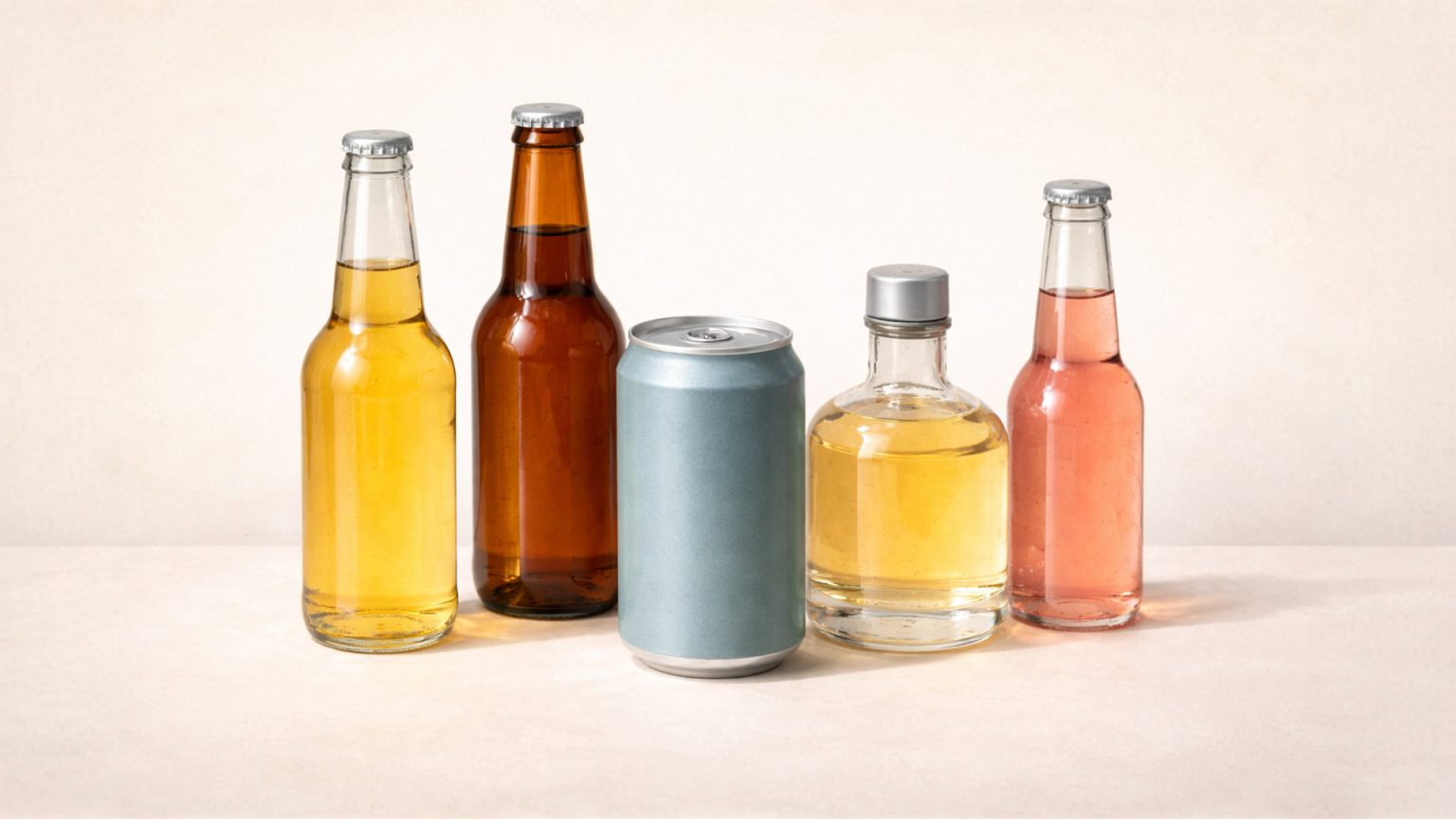
Production economics reinforce the logic. Beer and spirits producers must apply dealcoholization (vacuum distillation, reverse osmosis, or controlled fermentation), but they can integrate these steps with minimal disruption to core fermentation, packaging, and brand lines – lifting factory utilization and spreading volume risk in a flat market. Wine players remain largely absent: dealcoholization is technically more challenging for wine (higher fidelity loss in acidity, tannins, and complexity), marginal utility is smaller (wine already positions as low-degree, slow-sip, meal-oriented), and brand value is deeply tied to alcohol-driven structure and aging potential. Protecting existing price tiers trumps new 0.0 ventures, though technical breakthroughs could unlock late-mover potential.
A fourth pressure: marketing reach. NoLo unlocks daytime, sports, family, and social-media inventory where alcohol ads face limits. Heineken 0.0 campaigns exemplify this expansion of storytelling space.
Deeper Drivers: Demand Pull
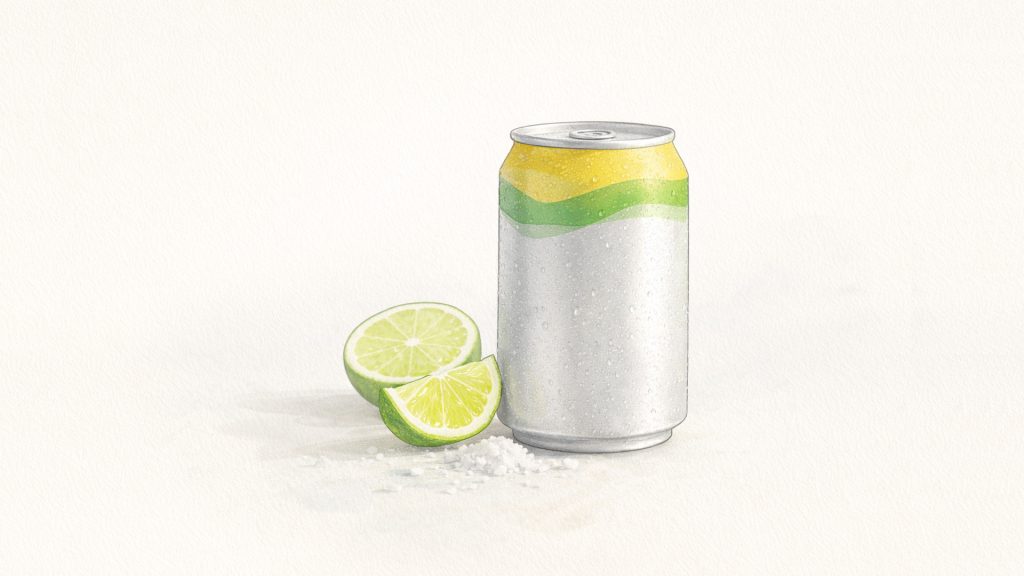
Ask a bartender what changed in the last three years, and they’ll point to the same thing: more guests ordering one real drink, then switching to zero-proof without apology. Drinking culture evolves too. The old “alcohol equals indulgence” narrative fades as zebra striping – alternating alcoholic and non-alcoholic in one session – becomes mainstream. Past alternatives failed not on taste but on ritual fidelity: juice lacks adulthood, soda no ceremony, mocktails too costly or slow. NoLo delivers the same glassware, pour sound, brand equity – adult label, brand backing, social safety. Constellation’s Modelo Chelada Limón y Sal Non-Alcoholic captures this: bold flavor, zero compromise on ritual.
Subscribe to our newsletter
Behind the rise of premium de-alcoholized spirits lies a quieter truth: consumers still crave the ritual of a serious pour, but they no longer want to pay for it with next-day regret. Psychologically, anxiety-era consumers seek relaxation without loss. NoLo enables risk-managed adulthood: indulgence, sociability, and unwind remain, minus loss of control, composure, or efficiency. Premium de-alcoholized whisky or rum offers controlled indulgence – a managed ritual of low-risk pleasure.
When executives justify nine-figure investments in 0.0 lines, the spreadsheet rarely mentions “health”; the real line item is long-term brand continuity and category defense. Giants invest heavily – Heineken allocates significant marketing to 0.0, accepting lower margins for long-term yield. Two paths dominate: flagship extensions (Guinness 0.0, Heineken 0.0) for continuity, or independent brand acquisitions for early positioning. The payoff is brand gradient flow: 19-year-olds lock into the marque, migrating to full-strength later. More critically, NoLo is category perimeter defense. Without it, entry points erode to soda giants, energy brands, wellness drinks – category adjacency loss. Wine’s relative absence underscores the point: high barriers, lower urgency.
Four Core Questions
Q1: How does the industry keep drinking viable in lives that no longer tolerate hangovers?
NoLo makes drinking compatible with tomorrow’s calendar – full mornings, dense schedules, multi-occasion nights. It is not about reducing psychological costs; it is about ensuring alcohol does not disqualify you from the rest of your week. This is the new entry condition.
Q2: Is NoLo solving alcohol’s problem – or the problems alcohol was masking?
Primarily the latter: social structures, cultural reframing, psychological demands, supply pressures. Alcohol was never the only friction. It was simply the most visible one.
Q3: What proves this is structural remaking, not another cycle?
The hardest signal is already emerging: NoLo moves from dedicated zones to default menu integration, mixed shelving, loyalty inclusion. Giant patience – capacity doublings, marketing reallocations, regulatory alignment – follows. When drinking occasions normalize zero-proof as the baseline option, the shift is locked in.
Q4: If NoLo wins the redesign, which formats lose relevance in modern drinking moments?
Mid-tier traditional beers get diverted from multi-occasion nights; low-price sweet RTDs cede ground to formats that still carry adult ritual; single-scenario brands shrink as occasions fragment; certain meal-oriented wines risk permanent marginalization if they miss the perimeter shift. The real loss is not volume – it is access to the new rules of when and how drinking happens.
In a cycle of volume pressure and shifting boundaries, NoLo is not expanding drinking. It is redesigning the conditions under which drinking remains acceptable – socially, regulatorily, productively. It does not change why people drink. It changes when, where, and under what risks drinking can still happen. That is its mechanism.