Carlsberg reported revenue growth of 18.8% and operating profit growth of 22.7% for 2025. Strip out acquisitions and portfolio changes, and organic beer volumes declined 2.9%.
This growing divergence between headline figures and underlying beer performance is no longer an anomaly – it is becoming the defining pattern across the global brewing sector. What was once an occasional divergence is now recurring with greater frequency across major global brewers. Where headline growth once reliably signalled underlying business strength, it now increasingly obscures shifts in underlying beer demand.
Carlsberg’s 2025 results offer a clear window into how major European brewers are navigating – and being reshaped by – this structural rebalancing.
Headline Growth and the Shifting Business Mix
The reported numbers are heavily shaped by the Britvic acquisition. Without it, organic revenue growth would have been marginal and operating profit growth modest. Even adjusting for portfolio changes, underlying beer demand remained soft.
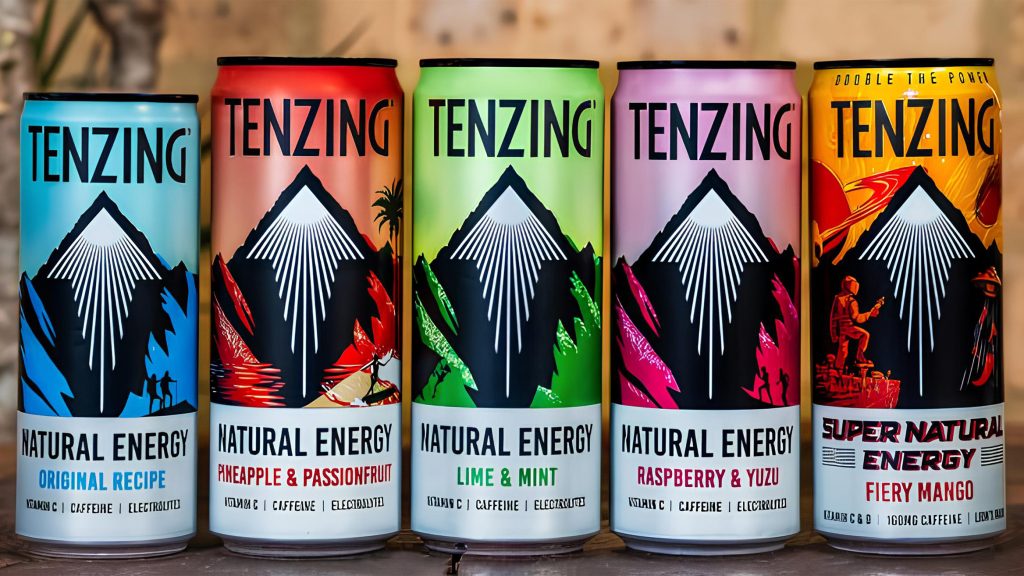
This is not simply acquisition-led expansion – it represents a structural repositioning of revenue sources away from traditional beer volumes. The share of non-beer (mainly soft drinks) in the group mix rose sharply in 2025 and is set to remain materially higher going forward.
The financial footprint of this pivot is visible in leverage. Net interest-bearing debt to EBITDA climbed to 3.28×, a level that makes capital allocation decisions significantly more consequential – and more time-sensitive – going forward.
Taken together, the implications are clear: the growth model itself is changing – from volume-led to mix-led.
Premiumisation as a Defensive Layer
Premium and international brands grew organically by around 5%, alcohol-free beer by 4%. These are respectable numbers in a difficult environment. Yet their absolute volume contribution remains far too small to offset the much larger decline in mainstream beer.
Premiumisation is increasingly functioning as a defensive layer rather than an offensive growth engine. In many markets it is more often slowing erosion than driving expansion.
It captures fewer but higher-value drinking moments in a landscape where traditional beer occasions are becoming shorter, more fragmented, and more open to substitution. The arithmetic is unforgiving: small, fast-growing segments rarely outrun slow declines in very large legacy categories.
The mainstream segment is losing its position as the default choice across many occasions and price tiers.
Asia’s Fragmenting Growth Engine
Asia, long the most important volume expansion engine for European brewers, is no longer behaving as one unified growth story.
Subscribe to our newsletter
Organic beer volumes in the region declined further in 2025, with striking divergence inside the bloc:
- double-digit mainstream declines in Vietnam, Laos and Cambodia
- continued pressure on lower-tier and western China Mainland
- share gains in premium segments in first-tier Chinese cities
- high single-digit growth in India (led by strong mainstream and premium brands)
The region has become a multi-speed portfolio laboratory rather than a reliable volume escalator. Growth is increasingly local, urban, and stratified.
Structural factors – uneven on-trade recovery, distributor consolidation, and an emerging premium ceiling in several markets – are at least as important as macroeconomic conditions.
The fragmentation of Asia’s growth engine introduces a more complex foundation beneath the long-term growth narrative on which many European brewers’ strategies have historically relied.
Strategic Trade-offs in the New Reality
None of these tensions are unique – but their simultaneity is what defines the current strategic environment.
Three central trade-offs stand out:
- Diversification vs brand focus Expanding into soft drinks and adjacent categories strengthens resilience and earnings diversity, but risks diluting attention and investment behind core beer brands.
- Deleveraging vs investment intensity Faster debt reduction improves resilience and optionality, yet constrains the marketing, innovation and capacity investments required to defend or regain share in beer.
- Profitability vs market footprint Exiting structurally low-return categories and geographies lifts margins, but reduces scale, presence and optionality in future recovery scenarios.
Over the next two to three years, the profit margin performance of the soft drinks business will be one of the most important observable indicators of whether this diversification strategy is succeeding on its own terms.
The Decade Ahead
Carlsberg’s 2025 results are not an isolated story. They reflect a broader, ongoing rebalancing across the global beer industry.
The past decade belonged to premiumisation – raising average price per litre and improving mix within the beer category.
The coming decade is likely to be defined by portfolio architecture: the ability to build and manage a more elastic combination of brands and categories that can cover a wider, more fragmented range of drinking occasions and consumer preferences.
The industry’s next phase will not be defined by who sells the most beer, but by who manages the most adaptable portfolio across an increasingly fragmented set of occasions.
2026 guidance already signals that the path will not be straightforward.