For the past decade, whisky stood as the most dependable growth driver in global spirits. Johnnie Walker pushed into new territories, Jack Daniel’s held strong command of the American market, and blended Scotch steadily collected premiums in emerging regions. Simply riding the premiumisation wave often felt sufficient.
That assumption no longer holds in fiscal 2026. Performance inside the category has split sharply along brand, price band, and geography. Consumers are repricing whisky, channels are resetting priorities, and inventory pressure combined with tariffs now shape outcomes more than brand heritage alone.
Last year Scotch exports to the United States dropped 9.2% in volume, with the decline steepening to 15% in the months after tariffs hit. Value fell 4%. In Diageo’s first half of fiscal 2026, Johnnie Walker Red, Black, and Blue labels posted organic net sales growth, yet the group’s overall organic net sales declined 2.8%. North American spirits softness, particularly in tequila and Crown Royal, together with weakness in Chinese baijiu, created the main drag. Brown-Forman saw its core Tennessee Whiskey lines under pressure, with flavour extensions offering only limited relief. Pernod Ricard’s Chivas and other core blends also faced headwinds, especially in travel retail.
The easy returns from premiumisation are fading. Whisky has entered a phase where genuine growth demands execution.
Structural Shifts Behind the Slowdown
Consumer habits have shifted in fundamental ways. Wallet pressure, the spread of GLP-1 medications, and broader moderation trends have steered entry-level drinkers toward RTDs and highballs that deliver convenience and lower alcohol at attractive prices. Even higher-end consumers have become more selective. They now reserve premiums for differences they can actually taste or verify, such as specific cask finishes or clear age statements, rather than broad storytelling.
Supply-side realities have compounded the challenge. Rapid expansion in previous years left the industry with substantial aged inventory. Distributors and retailers moved into destocking mode, hitting the middle price band hardest. Some distilleries slowed output or left capacity idle.
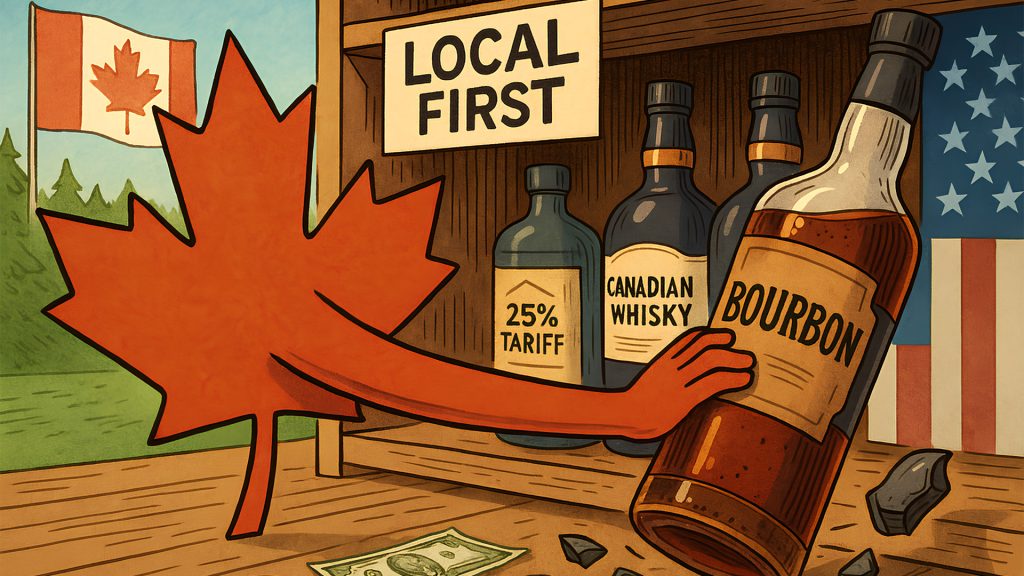
External factors added further strain. Tariffs on Scotch directly affected the largest single market. Adjustments in controlled-state distribution systems raised the cost of execution. Travel retail recovered more slowly than hoped. In contrast, accessible premium expressions, often in smaller formats, gained ground quickly in emerging markets.
The category is moving from story-led expansion to a model built on sharper execution and verifiable value. The strongest players are already showing how this works.
How the Leading Brands Are Responding
Johnnie Walker has demonstrated clear resilience in this environment. During Diageo’s fiscal 2026 first half, the trademark delivered organic growth across its Red, Black, and Blue expressions, with standout results in Türkiye, MENA, India, and Brazil.
Its moves have been practical. In India the company expanded 180ml formats and local flavour innovations to bring new consumers into the Prestige and Above segment. In Türkiye and MENA it used targeted pricing to counter inflation while strengthening visibility and distribution. Across markets Diageo lifted A&P efficiency through AI-driven content, virtual studios, and smarter media buying. The Keep Walking platform kept its global identity while adapting to local occasions and moments.
These steps enabled Johnnie Walker to generate volume where it mattered and protect premium equity elsewhere, helping cushion wider group softness in North America.
Jack Daniel’s has faced a more difficult path. Core Tennessee Whiskey encountered pressure in its home market amid fierce competition and sustained consumer caution. Inventory destocking lengthened the adjustment cycle. Flavour innovations such as Tennessee Blackberry and extensions into RTDs and highballs provided some offset, while Woodford Reserve continued to perform in the ultra-premium tier. Brown-Forman responded with frequent route-to-market refinements to regain control and efficiency.
Even the dominant American whiskey name cannot coast on past momentum. Incremental innovation and tighter execution have become baseline requirements.
Chivas Brothers reflects a more typical premiumisation hangover. Core expressions like Chivas 12 came under pressure, with travel retail particularly weak. Growth continued in India and Türkiye, yet the overall response felt more measured. High-end narrative remained intact, but accessible premium development and ground-level execution intensity lagged, leaving the middle segment exposed.
Taken side by side, the pattern is evident. Brand aura alone no longer secures premium pricing. Success now hinges on execution intensity, regional adaptability through formats and relevance, and product attributes consumers can genuinely experience.
What Consumers Are Rewarding
Buying patterns are redrawing whisky’s value equation.
Highballs and whisky-based RTDs have become go-to options for moderation and everyday convenience. They solve both portion control and price sensitivity. Smaller accessible premium packs, especially 180ml sizes and well-targeted flavours, have worked in markets like India when backed by real utility rather than marketing concepts.
Drinking occasions continue to fragment. At-home consumption favours repeatable value, while on-trade still supports experiential premium moments. Verifiable qualities, from explicit age statements and distinctive casks to transparent provenance and sustainability, are the attributes that increasingly justify higher prices.
Consumers are signalling clearly with their spending: tangible difference matters more than narrative.
Regional Divergence Defines the Outlook
North America has become the toughest execution arena. Wallet pressure, intense competition, and tariffs require precision at every sales point. As Diageo’s largest region, representing about 36% of net sales, its performance carries outsized weight for global results.
Europe is working through destocking, with mid-tier products in mature markets under the greatest strain.
Asia presents layered opportunities. India serves as a dual engine for both accessible and prestige segments. China Mainland’s high-end demand remains subdued. Southeast Asia demands continuous localisation. Türkiye and MENA still reward premium Scotch for brands that execute with high intensity.
Across emerging markets, localised accessible premium expressions hold the most durable potential.
The future of whisky depends less on defending legacy share in old strongholds and more on adapting to new occasions and geographies.
The Road Ahead
Price discipline will separate capable players from the rest. Execution intensity, covering distribution control, on-premise activation, and efficient marketing, will determine who survives the transition. Authentic innovation in liquid and format, not conceptual line extensions, will build lasting advantage. Scale will prove valuable only when it translates into local relevance.
The decade of effortless whisky gains is over. The next three years will reward companies that respond most honestly to consumers’ revised value judgements and convert global resources into consistent regional execution. The latest earnings reports already show the early contours of this new reality.