Champagne houses have long competed through brands and controllable production. Burgundy’s finest vineyards derive their value from scarcity that cannot be expanded. Louis Roederer’s acquisition of Domaine Pierre Damoy suggests that irreplaceable vineyard assets are becoming increasingly strategic.
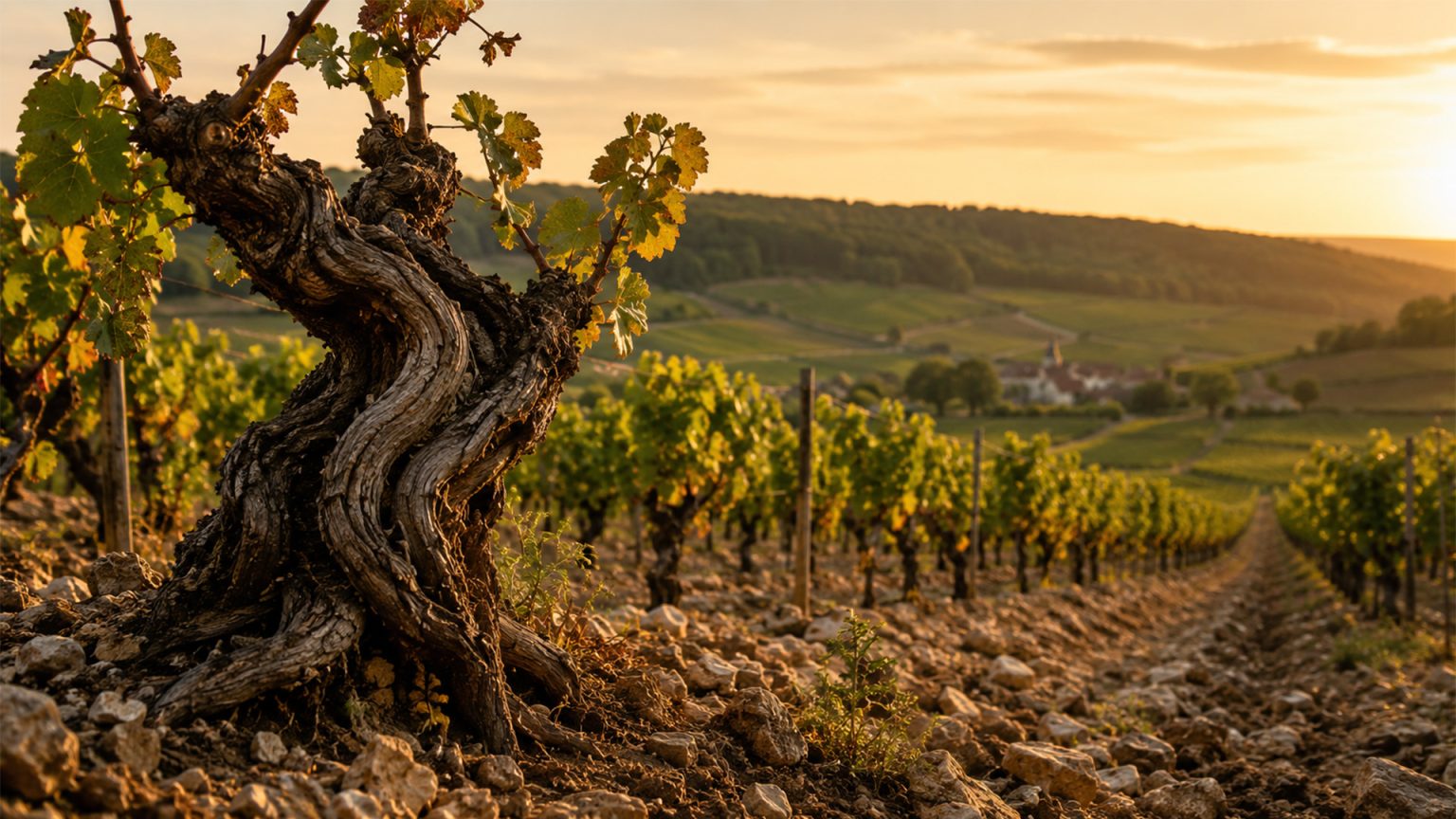
The deal closed on 24 July 2026 and brought the Gevrey-Chambertin estate into the Roederer Collection. It covers nearly eight hectares of Grand Cru vineyards, including the largest single holding of Chambertin-Clos de Bèze at roughly 5.36 hectares, together with parcels in Chambertin and Chapelle-Chambertin and the monopole Clos Tamisot. Terms were not disclosed. Roederer first took a stake in the estate in 2025 before completing full ownership this July. The purchase coincides with the house’s 250th anniversary.
Frédéric Rouzaud framed the move as stewardship rather than simple expansion. The broader backdrop helps explain the timing. Champagne has set its 2026 marketable yield at 8,800 kilograms per hectare, equivalent to about 250 million bottles, among the lowest levels of the modern era. This continues a series of reductions aimed at managing stocks after demand softened and the pace of premiumisation slowed. In that environment, the appeal of fixed-supply vineyard assets has increased.
Damoy offered both scale and position in a single transaction. Controlling the largest share of Clos de Bèze, one of the Côte de Nuits’ most tightly held climats, is not a symbolic foothold. It places Roederer inside the core of Gevrey-Chambertin’s Grand Cru hierarchy with a holding large enough to matter. For a family-controlled house whose primary business faces cyclical pressure on production and pricing, such land provides a more durable source of scarcity than brand equity alone. Like many Burgundy domaines, Damoy ultimately became available because of succession pressures.
Subscribe to our newsletter
The Roederer Collection already spans Champagne, Bordeaux, Provence, the Rhône, Portugal and California. Burgundy had long been the obvious omission among France’s leading fine-wine regions. Filling it with an estate of this weight signals long-term intent rather than anniversary optics. The transaction also underwent regulatory scrutiny over land concentration before gaining approval.
The lasting questions are commercial. Will production volumes stay restrained? Will the domaine’s identity and style be preserved? How will the wines be allocated within the wider group? Those answers will show whether the purchase prioritises patient ownership or portfolio prestige.
The transaction reinforces a broader reality: top Burgundy vineyards increasingly function as strategic luxury assets rather than agricultural property. Roederer did not buy into Burgundy simply to complete a map. The assets hardest to replicate remain those that cannot be expanded at all.