LVMH’s 2025 full-year results show Wines & Spirits revenue of €5.36 billion, down 5% organically. Recurring operating profit fell 25% to €1.016 billion, driving the division’s operating margin from 23.1% to 19.0% – the sharpest contraction in recent memory, following an already visible slowdown in 2024. The gap between revenue decline and profit collapse is the clearest signal: this is not a simple volume slowdown. It is margin compression at a scale rarely seen in the luxury alcohol division of the world’s strongest player.
The company’s communication emphasizes resilience – maintained 22% share in champagne, continued leadership in Provence rosé, ongoing investment in brand desirability, and disciplined cost management. Yet several realities receive far less emphasis. Hennessy shipments dropped from 80.8 million bottles in 2024 to 74.6 million in 2025, a decline of roughly 7.7%. Full-year organic revenue for Cognac & Spirits fell 12%, meaning both volume and realized price were under pressure. The second-half improvement (-4% vs -7% in the first half) was presented as progress, yet it reflects deceleration of decline rather than any meaningful recovery in underlying demand. Most strikingly, the report contains almost no quantitative disclosure on channel inventory levels, destocking provisions, or aged stock adjustments.
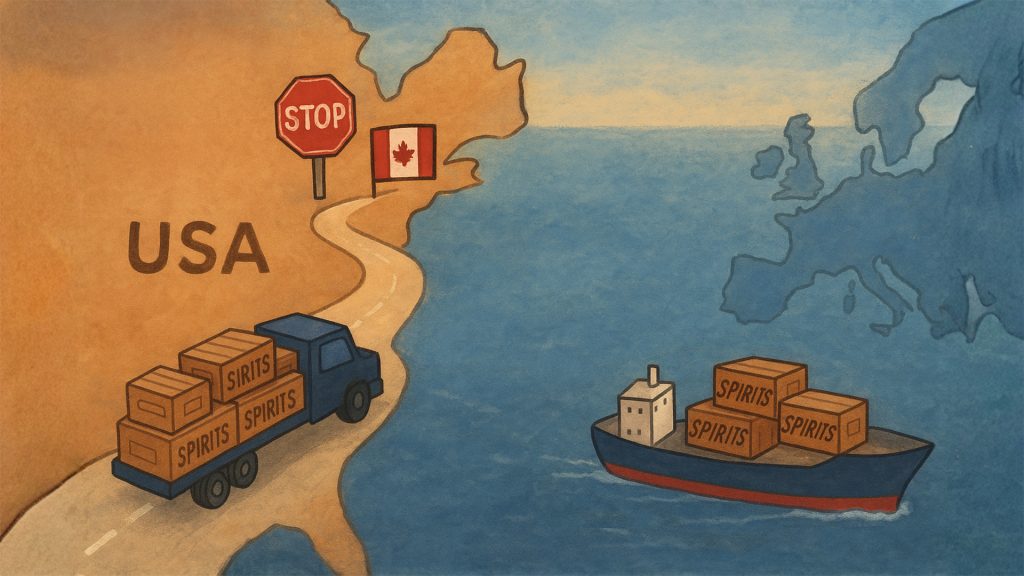
Cognac is where the structural stress is most visible. This marks the second consecutive year of volume contraction for Hennessy. For more than a decade the brand built its economics on high average prices, long aging cycles, and disciplined supply that supported premium positioning. That equation is now showing cracks. The United States and China – the two largest markets – face simultaneous headwinds: sustained consumer caution, tariff uncertainty, and in China’s case the shadow of the anti-dumping investigation. More importantly, the broader consumer reassessment of value in the ultra-premium white spirits segment has become evident. At current price points, XO and above increasingly compete with top-tier Scotch, Japanese single malts, ultra-aged rums, and – most notably – the rapidly ascendant prestige tier of aged tequila and mezcal. Absent any public indication of meaningful production curtailment (unlike several listed peers who have openly adjusted distillation volumes), the continued shipment decline suggests channel inventories are still being absorbed at the channel level rather than corrected decisively upstream.
Champagne and still wines present a more stable picture on the surface. Champagne shipments eased only modestly (61.7 million to 60.1 million bottles), and market share was preserved at 22%. Revenue remained broadly flat. Yet the growth driver came predominantly from Provence rosé – a category far removed from the core prestige houses. The intensive focus on artistic collaborations and ultra-limited Dom Pérignon releases may indicate that everyday grande marque cuvées are finding significantly less pricing headroom.
Subscribe to our newsletter
Management faces a familiar but sharpening dilemma. The division continues to speak of long-term brand investment while simultaneously highlighting efficiency programs and cost discipline. When operating margin contracts by more than four percentage points on a 5% revenue decline, fixed-cost deleveraging is failing and marketing spend is almost certainly under restraint. Group free cash flow rose 8%, yet the contribution from Wines & Spirits shrank sharply. Capital allocation across the wider portfolio may therefore tilt further away from the category in the coming years.
What happens in the strongest segment of ultra-premium spirits inevitably radiates outward. Three shifts are already measurable. First, the perceived luxury equity of very high-priced brandy is being re-evaluated by the consumer. Second, channel partners – travel retail and key distributors – are regaining leverage after years of brand dominance, forcing more promotional support and longer payment terms. Third, the mindshare of luxury drinking occasions is migrating toward other categories that currently offer stronger narratives of craftsmanship, rarity, or cultural relevance. When the most resilient and best-resourced player records this level of sustained profit erosion, the pattern stops being an isolated corporate story.
This is less about LVMH missing the mark than about the luxury spirits playbook itself being stress-tested – and showing visible strain. The near term will not merely reveal whether the division can stabilize volumes. It will determine whether the economic architecture that defined ultra-premium spirits over the past two decades remains structurally viable in a fundamentally altered consumer and competitive environment.